
By: Gaye Hammond Master Rosarian – Houston Rose Society
Not too long ago I had the great good fortune to attend a lecture presented by Dr. Ed Bush, Associate Professor of Ornamental Horticulture at Louisiana State University titled “What’s Wrong with My Rose?” According to Dr. Bush, most of the time a rose will send visible signals that something is wrong. Rose gardeners know to look for disease symptoms like blackspot and powdery mildew and damage caused by insects, but plant changes caused by nutrient deficiencies can be subtle and may go unnoticed in the early stages. The chart below provides a quick reference to helping diagnose nutrient imbalances in roses.
If your roses display symptoms from this chart, I would encourage you to send a soil sample to your state’s Soil Laboratory for confirmation before taking remedial action to rectify any nutrient imbalance. A soil test will not only identify nutrient deficiencies – it will also identify any nutrient levels that are too high as well as make recommendations for bringing the soil nutrient profile back into balance. Soil tests are inexpensive and the results are usually received within a week. Contact your local Extension Service or Master Gardener Association for forms/instructions on submitting soil samples.
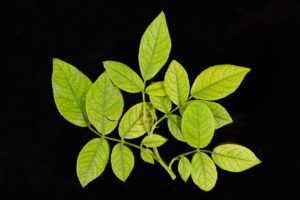
Figure 1 Yellowing between leaf veins can be caused by magnesium and manganese deficiencies.
Photo courtesy of Dr. Ed Bush, Louisiana State University
WHAT’S WRONG WITH MY ROSE?
The highlighted cells in this chart represent the suspected deficient element (nutrient). Abbreviations for the elements (nutrients) included in the chart are:
“N” Nitrogen “Cu” Copper
“P” Phosphorous “Zn” Zinc
“K” Potassium “B” Boron
“Mg” Magnesium “Mo” Molybdenum
“Fe” Iron “Mn” Manganese
| Symptom | Suspected Deficient Element (Nutrient) | Over Fertilization |
| N | P | K | Mg | Fe | Cu | Zn | B | Mo | Mn | Over Fertilization | |
| Yellowing of younger leaves | XX | XX | |||||||||
| Yellowing of middle leaves | XX | ||||||||||
| Yellowing of older leaves | XX | XX | XX | XX | |||||||
| Yellowing between veins | XX | XX | |||||||||
| Old leaves drop | XX | ||||||||||
| Leaf curls over | XX | ||||||||||
| Leaf curls under | XX | XX | XXXXX | ||||||||
| Leaf tips burn (younger leaves) | XX | ||||||||||
| Leaf tips burn (older leaves) | |||||||||||
| Young leaves wrinkle and curl | XX | XX | XX | XX | |||||||
| Dead areas in the leaves | XX | XX | XX | XX | XX | ||||||
| Leaf growth stunted | XX | XX | |||||||||
| Dark green / purplish leaves and stems | XX | ||||||||||
| Pale green leaf color | XX | XX | |||||||||
| Leaf spotting | XX | ||||||||||
| Spindly plant | XX | ||||||||||
| Soft stems | XX | XX | |||||||||
| Hard / brittle stems | XX | XX | |||||||||
| Growing tips die | XX | XX | |||||||||
| Stunted root growth | XX | ||||||||||
| Wilting | XX |